
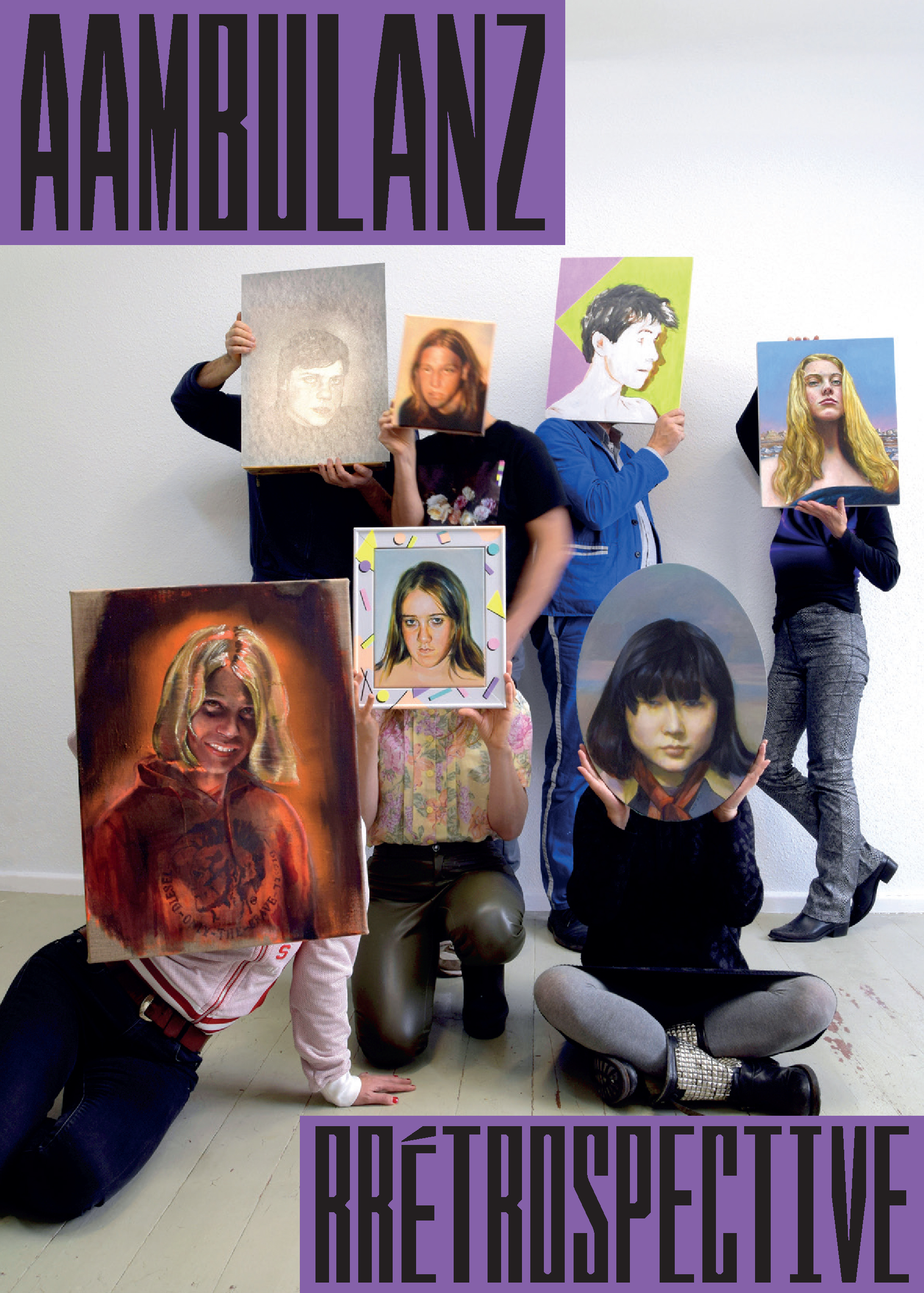
The Berlin-based collective Aambulanz Kollektiv is made up of seven artists from Germany, France, Ukraine, Iran and China: Michel Castaignet, Kathrin Landa, Florence Obrecht, Axel Pahlavi, Alexej Tchernyi, Alex Tennigkeit and Wu Zhi. Their individual practices focus primarily on painting—with the exception of Alexej Tchernyi—but within the collective they also explore sculpture and architecture.
Their exhibition at the Centre d’art Madeleine Lambert in Vénissieux is entitled Aambulanz Rrétrospective, a title that may seem audacious for a collective that has existed for only five years! Although some of the works on display are therefore not new, the artists have sought to renew the way they are presented in order to adapt them to the venue. They take over the exhibition space with paintings presented on a variety of supports: canvas, wood and even walls. Figurative subjects are their preferred field of exploration. More specifically, the collective focuses on portraiture and self-portraiture.
As we enter the exhibition, an oil painting on wood by Florence Obrecht presides above the reception desk. Rosalie, one of her models, proudly poses in an astronaut costume, her back straight and her gaze fixed in our direction. Yet as we move closer, we notice that she is sitting on a stepladder, holding a motorcycle helmet, while a ruff from another era encircles her neck! But who is she really?
The artists have then installed a group of seven works. Some are paintings placed on camp beds, while others are painted directly onto canvases stretched over the wooden frames of these beds. This arrangement evokes sleeping figures. This is precisely the subject explored in the works of Alexej Tchernyi, Axel Pahlavi and Alex Tennigkeit. Michel Castaignet, for his part, presents a work entitled Same Player Shoot Again, referring to the multiple lives granted to characters in video games. Yet the figure he depicts, wearing a Mario Kart mushroom as a belt buckle, is truly dead, shot through the centre of his body. He lies on a bed reminiscent of those used by soldiers.
Turning around, you discover a yellow wall covered in a densely packed display—around thirty works—which bears witness to the prolific output of these seven artists. Several of the paintings on display contain iconographic references to art history. In her oil painting on wood Autoportrait en Pierrot, for example, Florence Obrecht depicts herself wearing a diamond-patterned garment and a ruff. She refers to Watteau’s Pierrot, painted in 1718–1719 and held in the Louvre Museum. In Watteau’s painting, it is the whiteness of the central figure’s costume that immediately draws the eye. In Florence’s painting, it may instead be the yellow-and-black makeup framing her eyes that catches our attention. The artist also presents Faire des Picasso (Sophie), a portrait of a woman whose face, covered in colourful geometric shapes, evokes Picasso’s Cubist portraits, explicitly referenced in the title. Axel Pahlavi, meanwhile, presents Clown de sang, a work in which the character’s bewildered, astonished gaze, open mouth and hand gesture—with open palms framing the face—recall Munch’s The Scream, painted in 1893. Alex Tennigkeit presents a work entitled Die Lustmörderin (after Otto Dix), whose title refers to the German painter Otto Dix (1891–1969). Finally, Wu Zhi explores the representation of nature through landscapes whose circular format recalls the tondi frequently used during the Italian Renaissance. These landscapes invite us to slow down and take time to contemplate.
Throughout the Centre d’art, the artists have scattered their self-portraits, consisting of their silhouettes painted on wood. These figures may evoke you, the visitors, as you move through the exhibition. Kathrin Landa’s self-portrait is anchored in reality by the clothing she wears. It is both painted and made up of pieces of a paint-stained, zip-up V-neck sweater. Michel Castaignet also refers to his profession as an artist. He depicts himself holding a real paintbrush in his right hand, wearing a paint-splattered T-shirt, his gaze fixed on the object of his work, which nevertheless remains out of sight. In her self-portrait, Florence Obrecht appears realistically on the front of the wooden panel, while the reverse is a heterogeneous assemblage of popular cultural references, including Panini stickers. Axel Pahlavi’s self-portrait, on the other hand, may provoke a sense of unease through the sensation of being watched, given the sheer number of eyes covering it.
Further on stands a seven-sided collective pavilion, one side serving as its entrance, built in wood especially for the occasion. On the outside, each yellow-painted side provides a surface for a painting. The seven artists have reflected on the following question: what is an ordinary hero to me? Alex Tennigkeit answers with an oil painting on canvas entitled The Great Defender, whose iconography recalls that of Saint George slaying the dragon. In her pyramidal composition, she places at the centre a knight—whose body is that of a robot rather than a human being—brandishing a bladed weapon. The figure stands out against a dark background representing a cave. This twenty-first-century knight attempts to defeat the many-headed dragon beneath his feet. Two of its heads already lie on the ground; as he prepares to decapitate a third, he crushes a fourth with his hand.
Michel Castaignet, with El perro de San Roque no tiene rabo, refers to Saint Roch, who was born in Montpellier in the fourteenth century and cared for victims of the plague before contracting the disease himself, withdrawing into isolation and eventually recovering. The artist also evokes the COVID-19 pandemic, which recently spread throughout the world. Kathrin Landa, for her part, presents a contemporary urban heroine in the form of a woman flying above the buildings around her, aided by a cape. The clothes she wears—a shirt, pencil skirt and high heels—suggest that she is probably an office worker. At the same time, she carries children in her hands, most likely her own, carrying their schoolbags. For the artist, this woman possesses “extraordinary strength” because her work contributes to the development of society while, at the same time, she takes responsibility for educating and caring for her children.
Inside the pavilion, Alexej Tchernyi presents works installed in light boxes. One of them depicts Wu Zhi’s studio, where we can see oval works as well as the image of a swan—two recurring elements in her practice. We also discover, on an easel, a representation of a painting that actually exists and is displayed on one of the pavilion’s exterior walls. Can you find it?
Finally, the back wall brings the exhibition to a close by addressing the theme of adolescence. This is the subject of a large, newly created mural by Axel Pahlavi. It depicts a party in which young people move to the rhythm of music in what appears to be a vast, abandoned warehouse. Coloured spotlights installed above the stage and the DJ flood the space with light and obstruct our view with their beams. The protagonists move with a sense of freedom, even though the party was almost certainly organised clandestinely in an illegally occupied building.
The work is not accompanied by music, yet we can easily imagine the sound that might have filled this abandoned space. The artist starts from reality: a photograph of a rave party whose location and participants he does not know, and which he freely alters by adding portraits of friends or of an artist whose work he admires. Technically, Axel Pahlavi drew a grid in pencil across a wall of the Centre d’art in order to define areas onto which he projected his source image using a video projector. He then painted the image with an airbrush directly onto the wall of this former ballroom in the Maison du Peuple, now transformed into a venue for contemporary art.
Adolescence is also the subject of the artists’ self-portraits displayed on this mural. The seven works depict them frontally, in profile or in three-quarter view, with gazes that we cannot always meet. Do they lead us to reflect on our own adolescence? What memories do we have of it? How was it different from the adolescence of young people today? How much importance do adolescents in 2026 attach to their image compared with previous generations? How does our relationship with our own image evolve as we grow older?
Wu Zhi presents a self-portrait in an oval format reminiscent of a medallion, contrasting with the rectilinear borders of the others. Florence Obrecht’s self-portrait also stands apart through the frame surrounding it and extending beyond the canvas. Decorated with colourful geometric forms, it catches the eye with its pop aesthetic. Kathrin Landa, meanwhile, wears a sweatshirt bearing the profile of a man with an iroquois hairstyle, a look popular among punks.
The members of Aambulanz Kollektiv experienced their adolescence in the late 1980s and early 1990s. In 2023, they also entitled one of their exhibitions Back to the Future at the Stadtgalerie in Markdorf, Germany, referring to the film of the same name directed by Robert Zemeckis, whose first instalment was released in 1985. This American science-fiction film tells the adventures of the young Marty McFly, friend of Professor Emmett Brown, who seeks to travel through time with the help of a modified DeLorean.
Wu Zhi also displays, at the centre of the yellow wall at the entrance to the exhibition, a work entitled Back to the Future, in which she depicts herself alongside the six other members of the collective. Their facial features are those of adolescents, and the composition gives the impression of looking at a photograph of them together at that time—even though they had not yet met. Remarkable, isn’t it?!
Aambulanz Kollektiv was founded in 2020 during the COVID-19 pandemic. It initially exhibited outside institutional settings, directly in the streets. Still active today, the collective has presented its work in Germany, notably at the Haus am Lützowplatz art centre in Berlin, as well as in Lithuania. Each artist also pursues an individual career alongside the collective. Some of the artists have exhibited in France, but this is the first time the collective itself has been invited to exhibit there.
Emma Margiotta
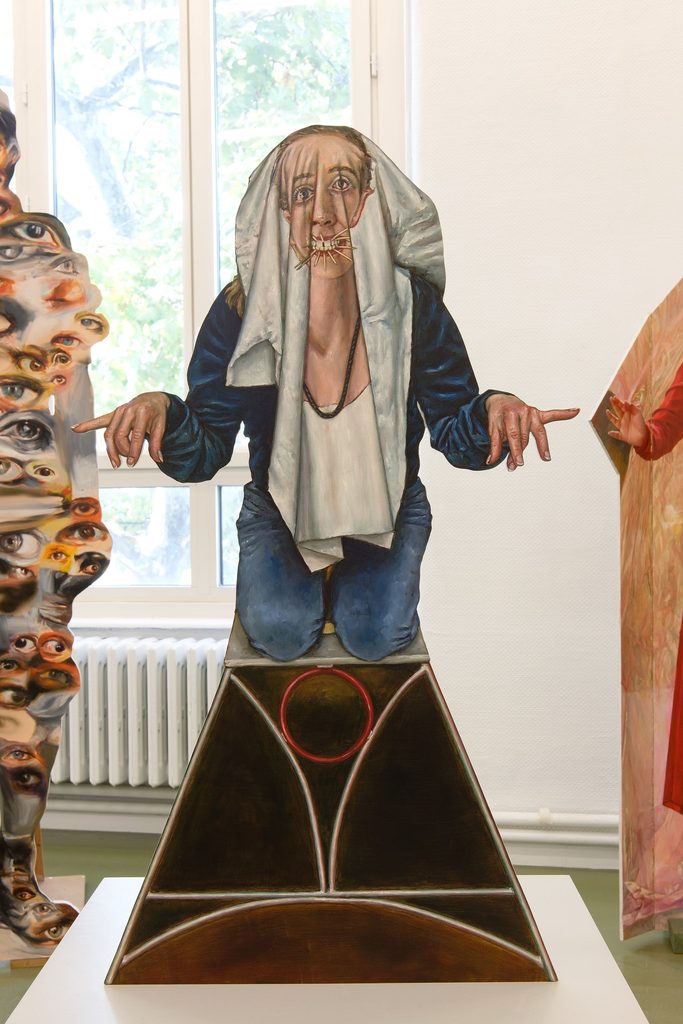
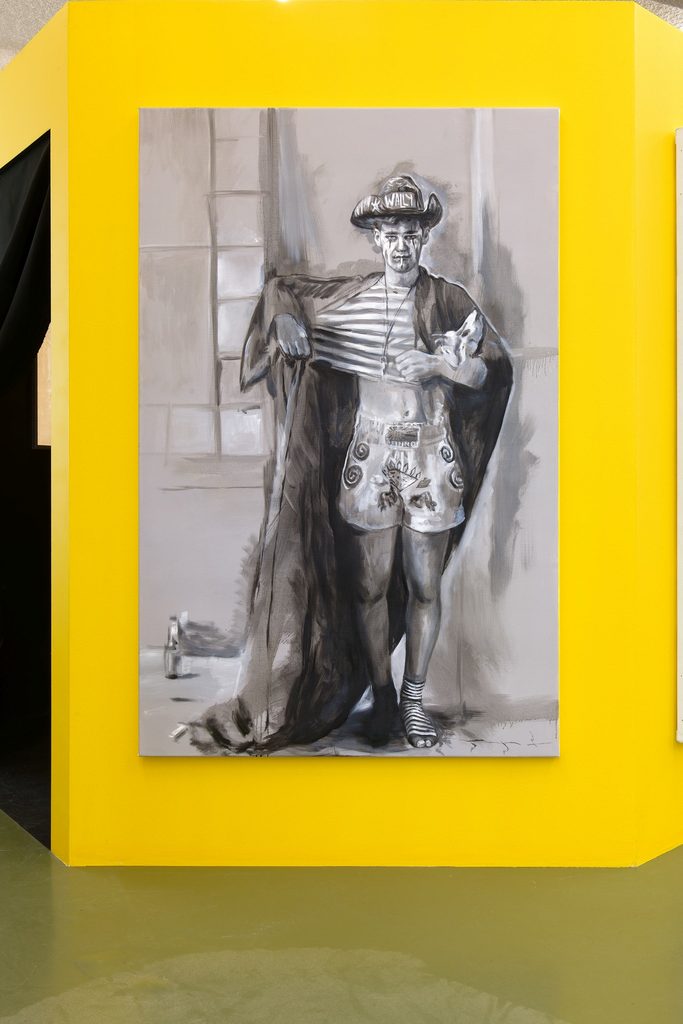
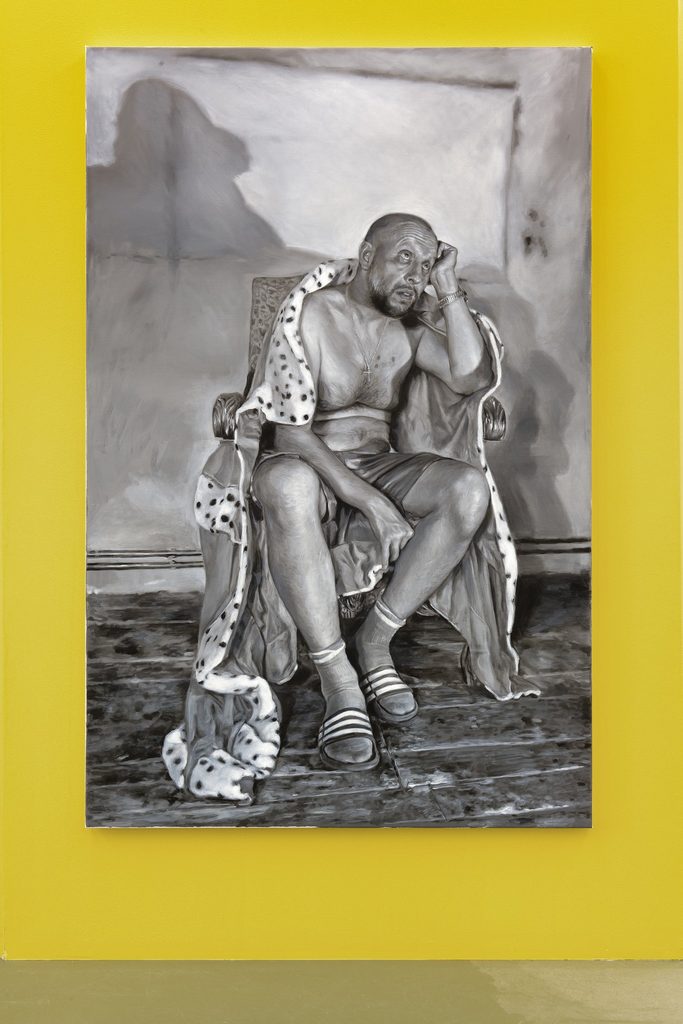
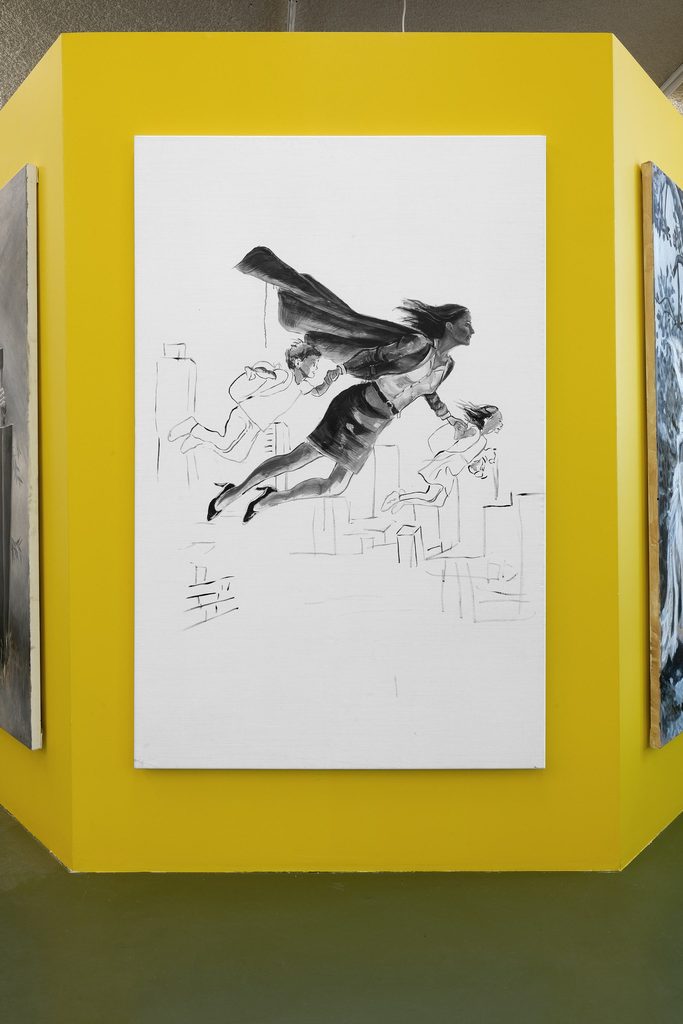
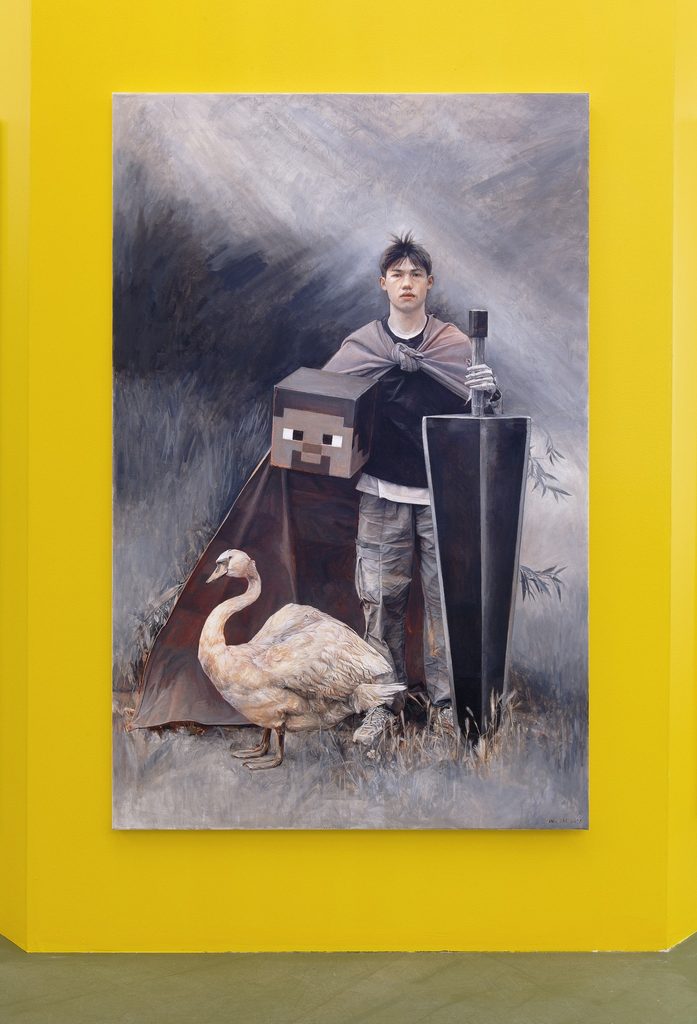
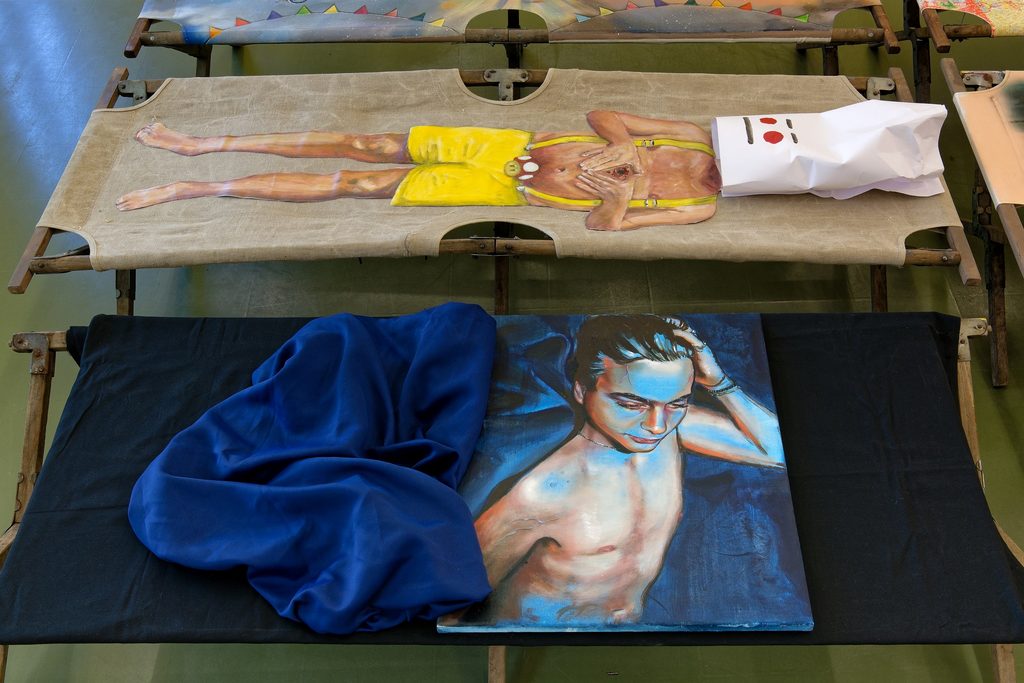
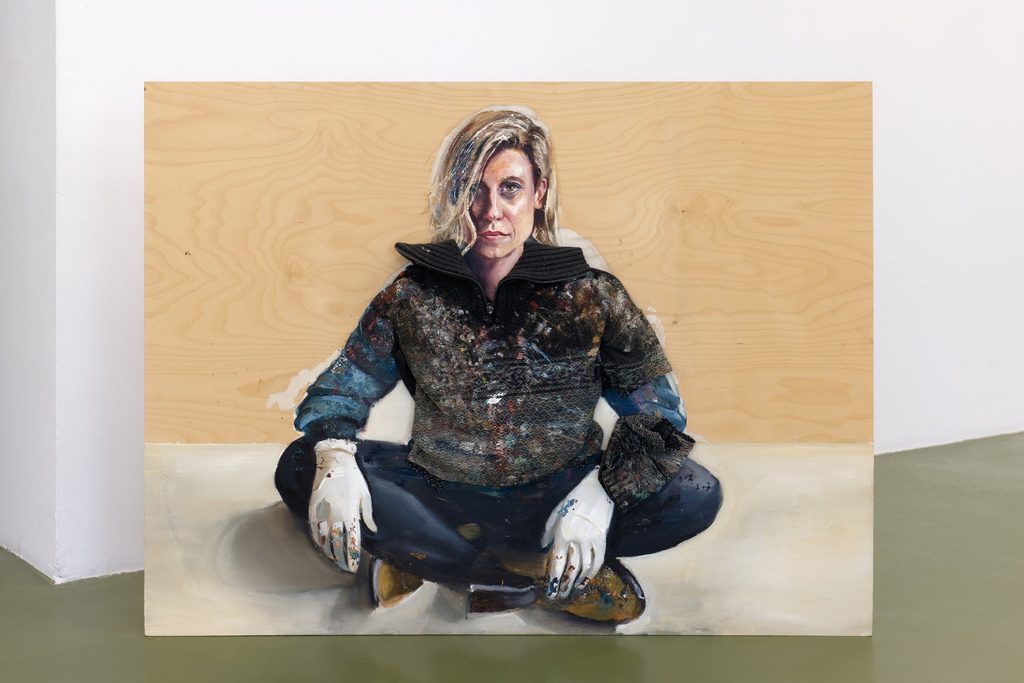
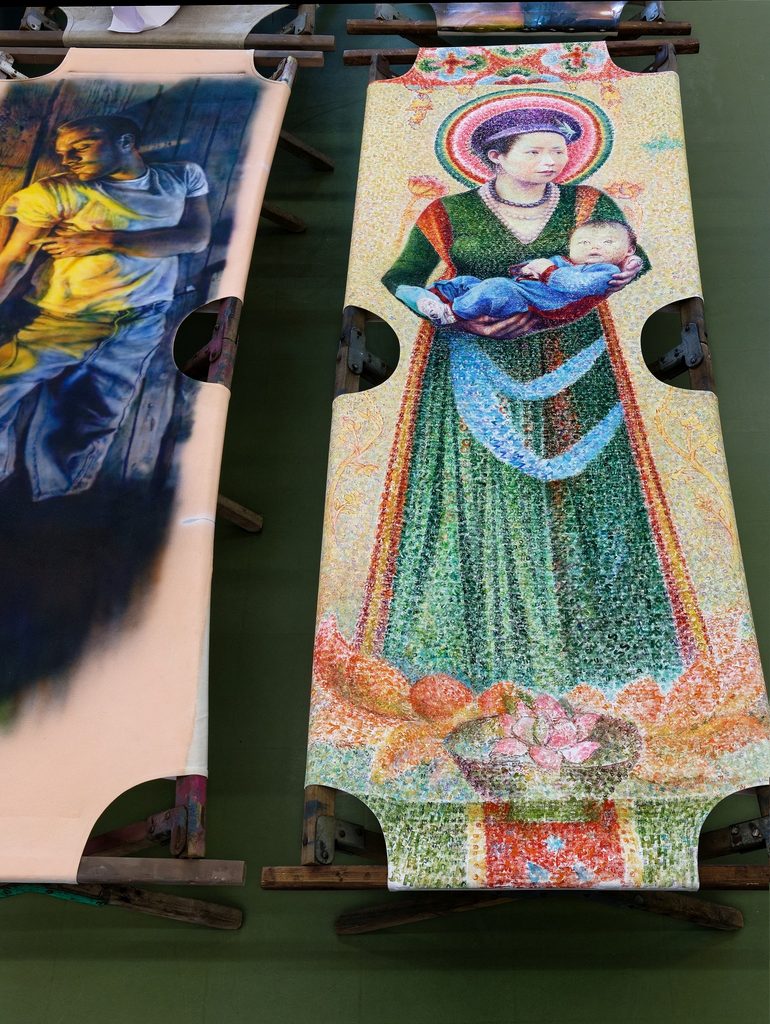
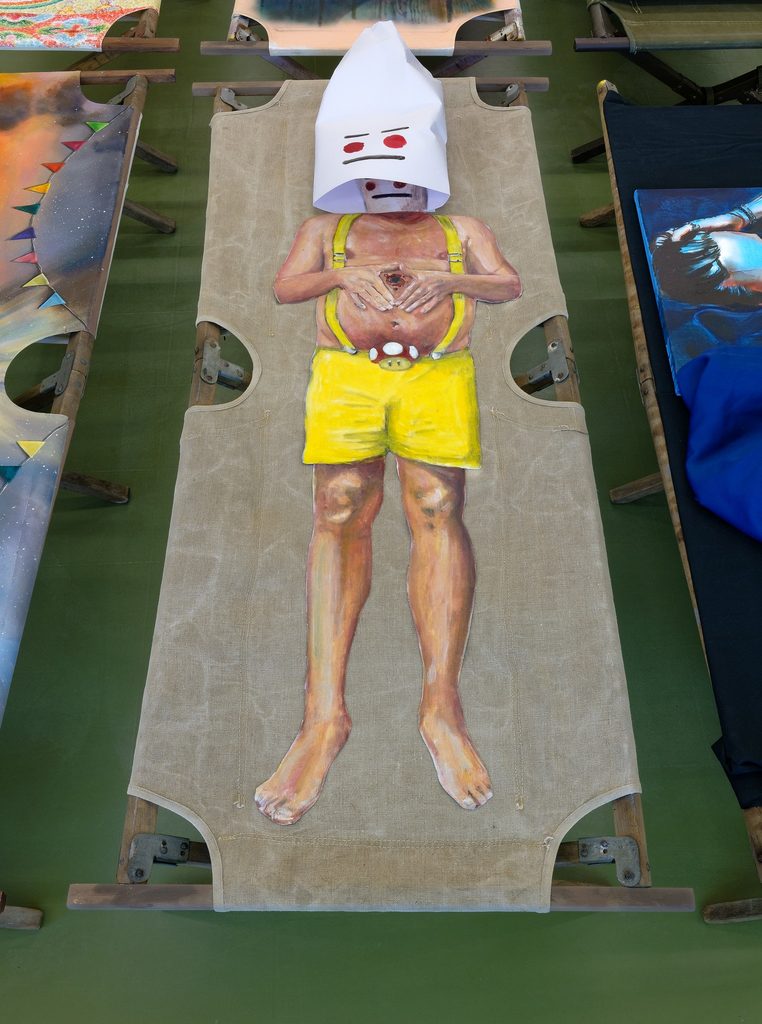
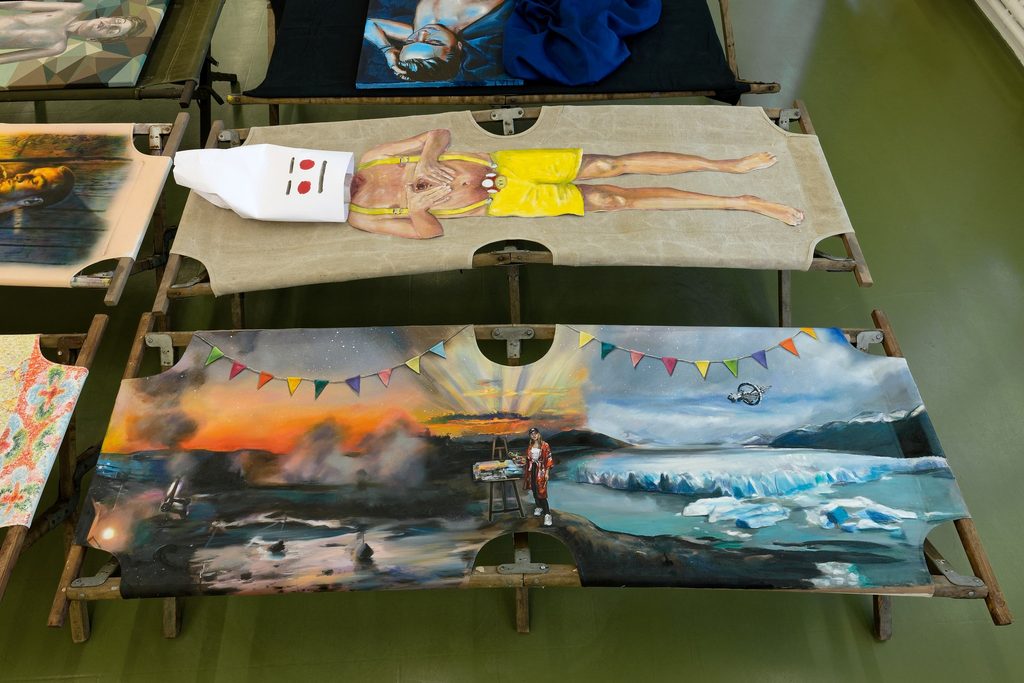
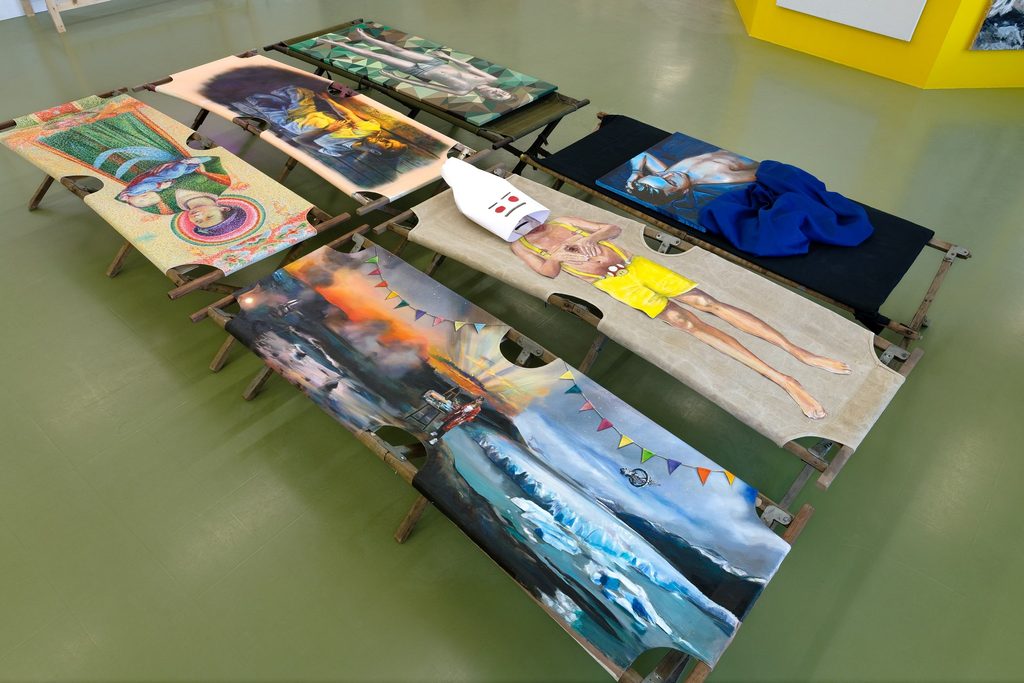
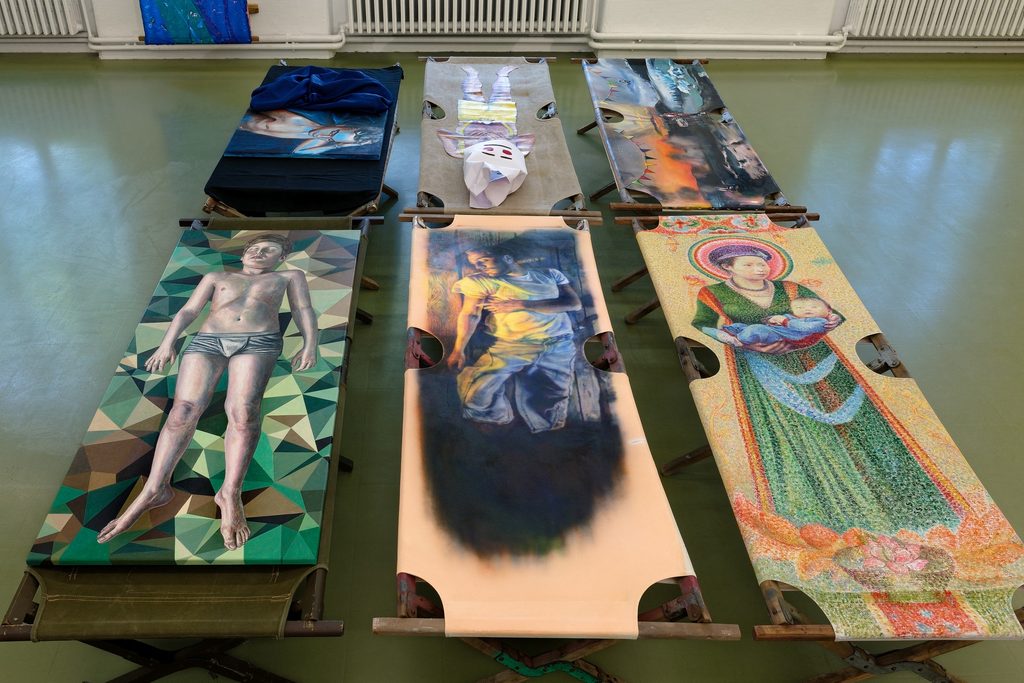
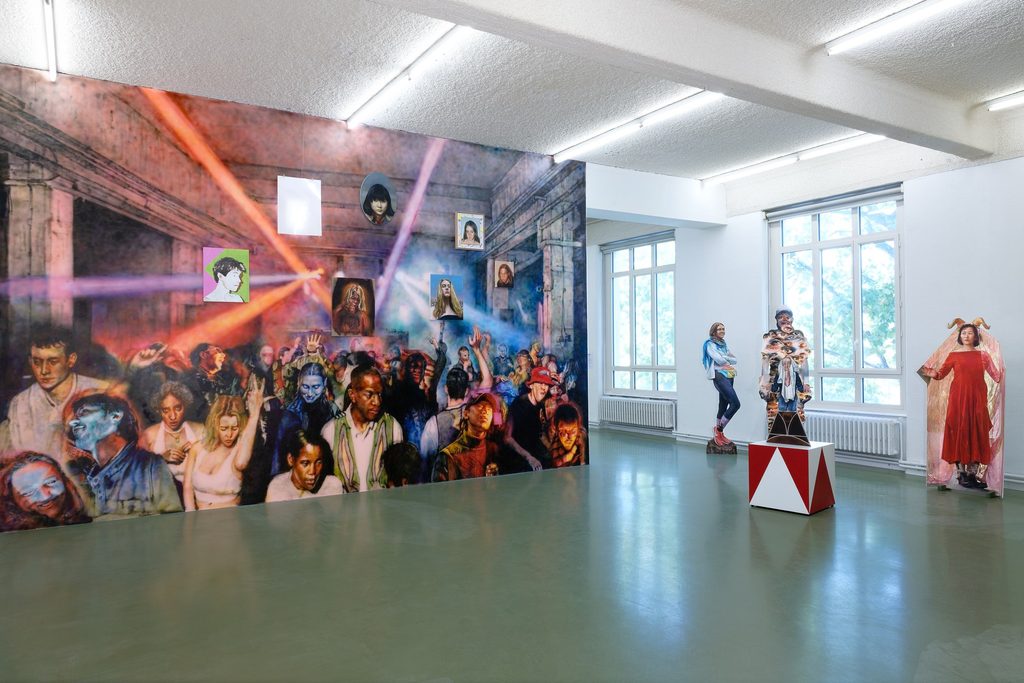
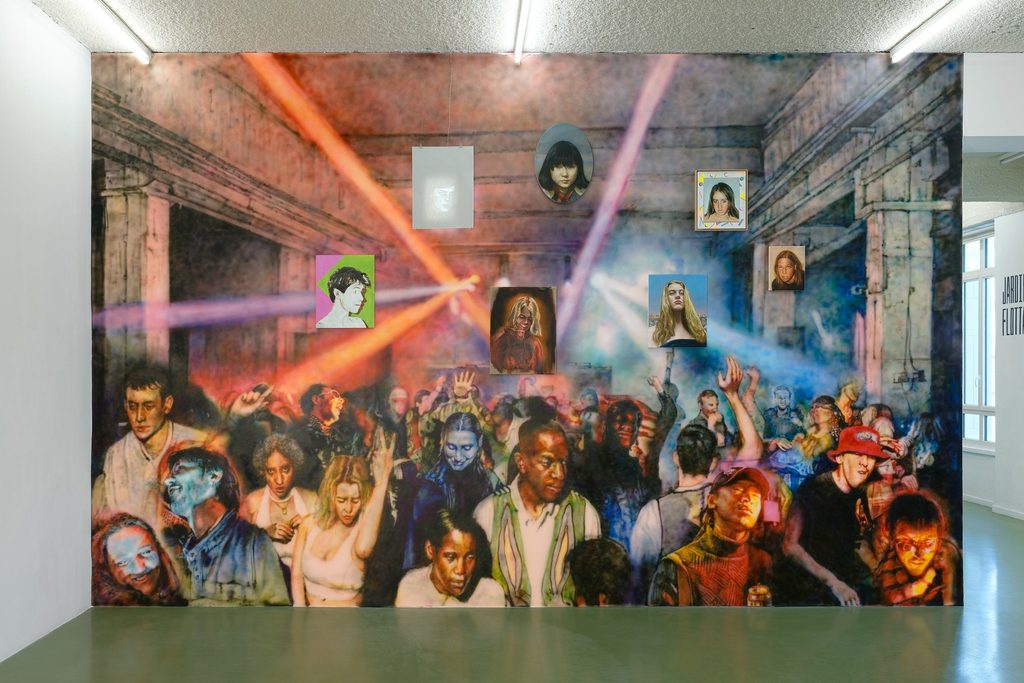
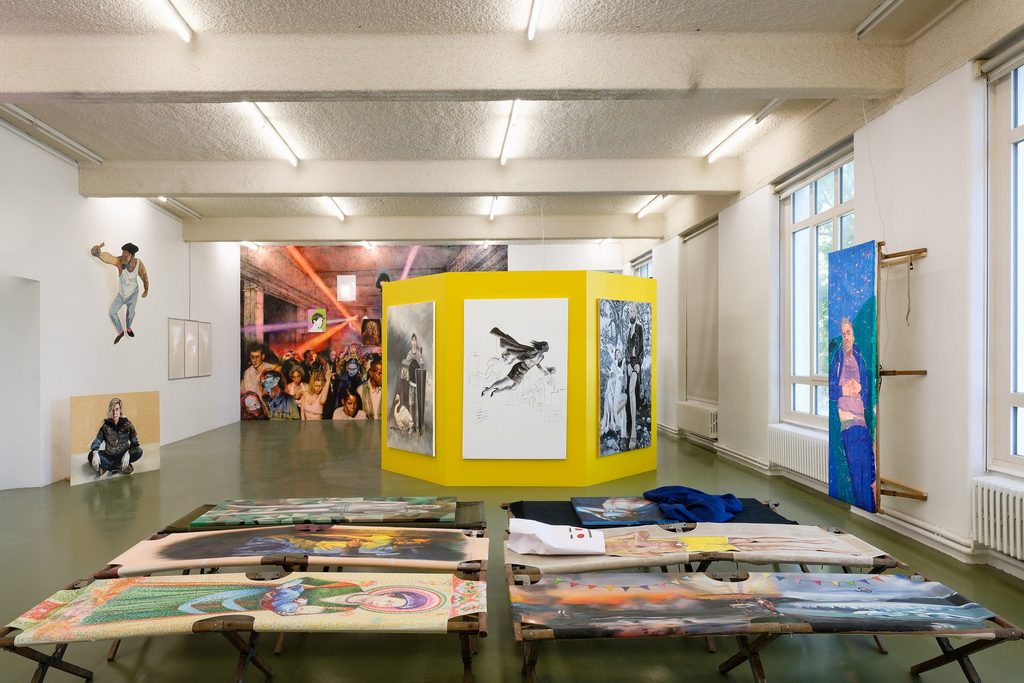
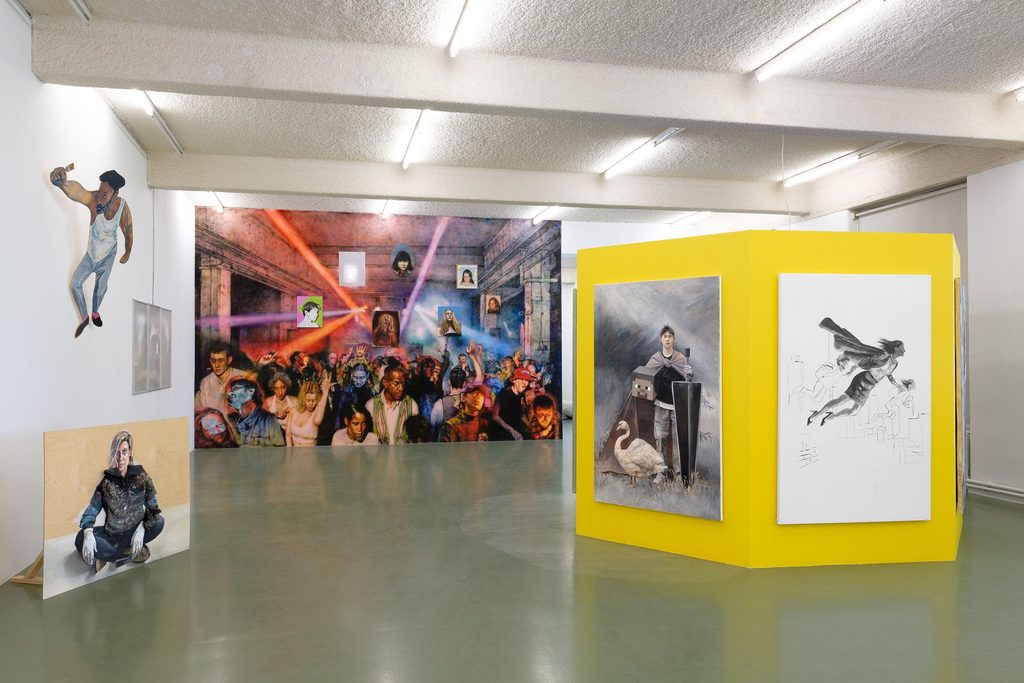
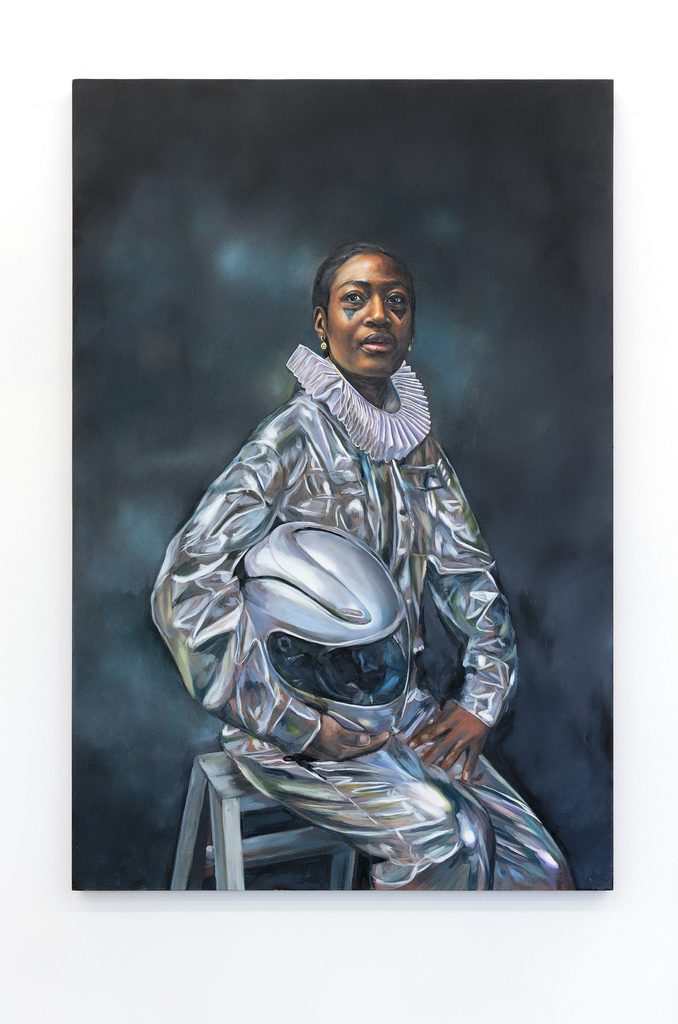
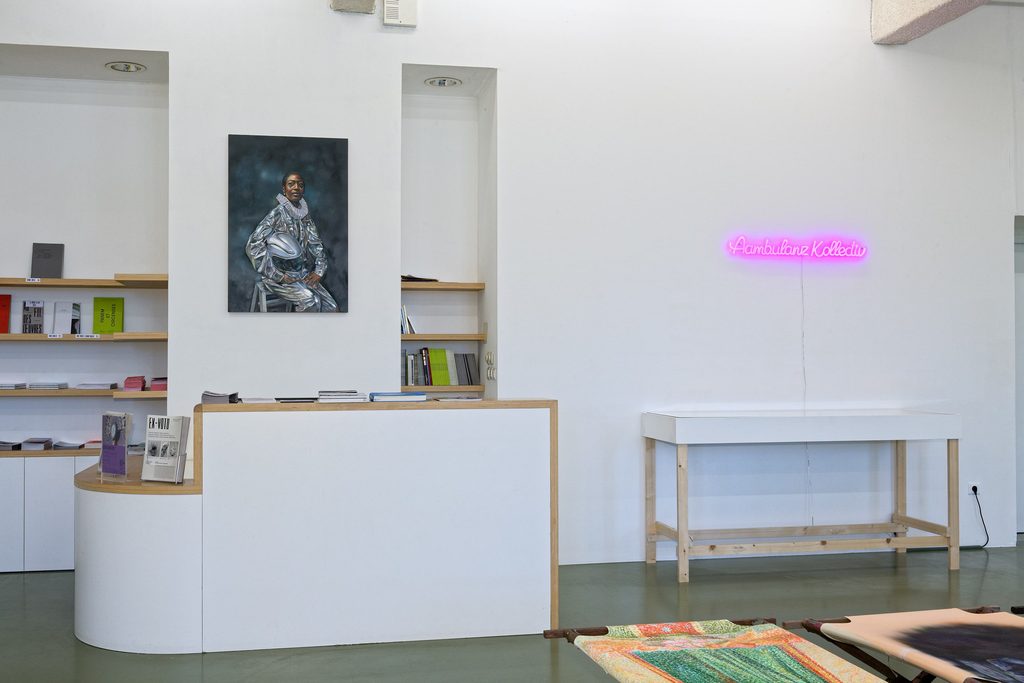
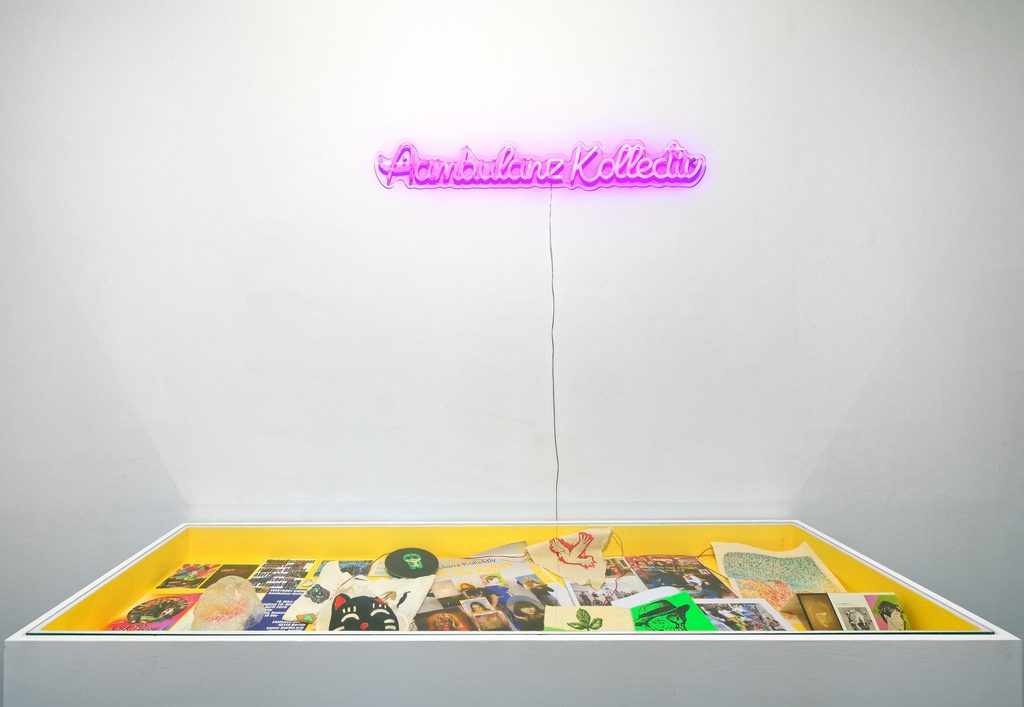
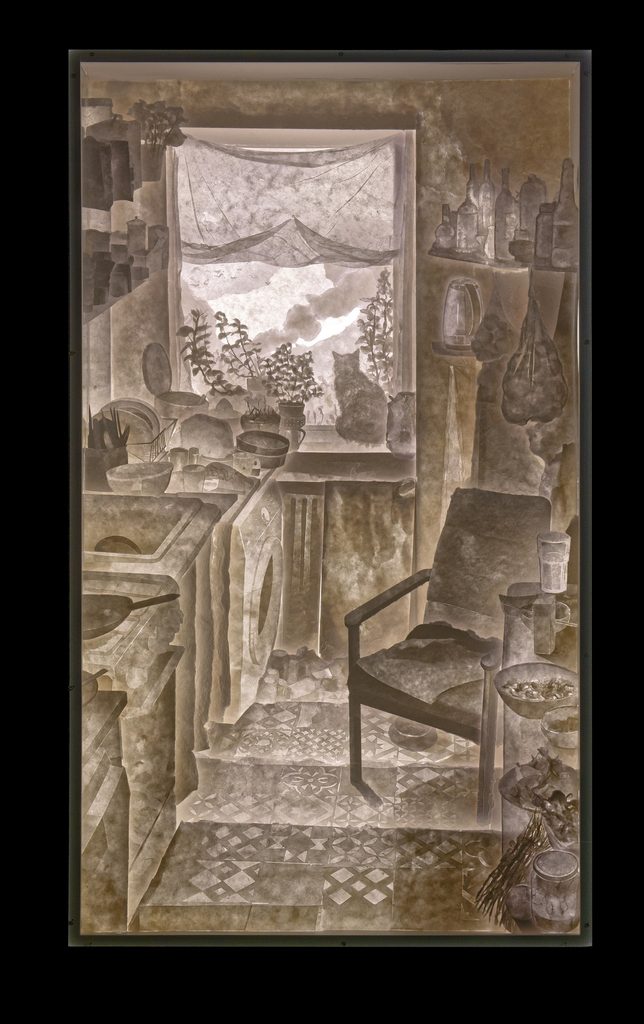
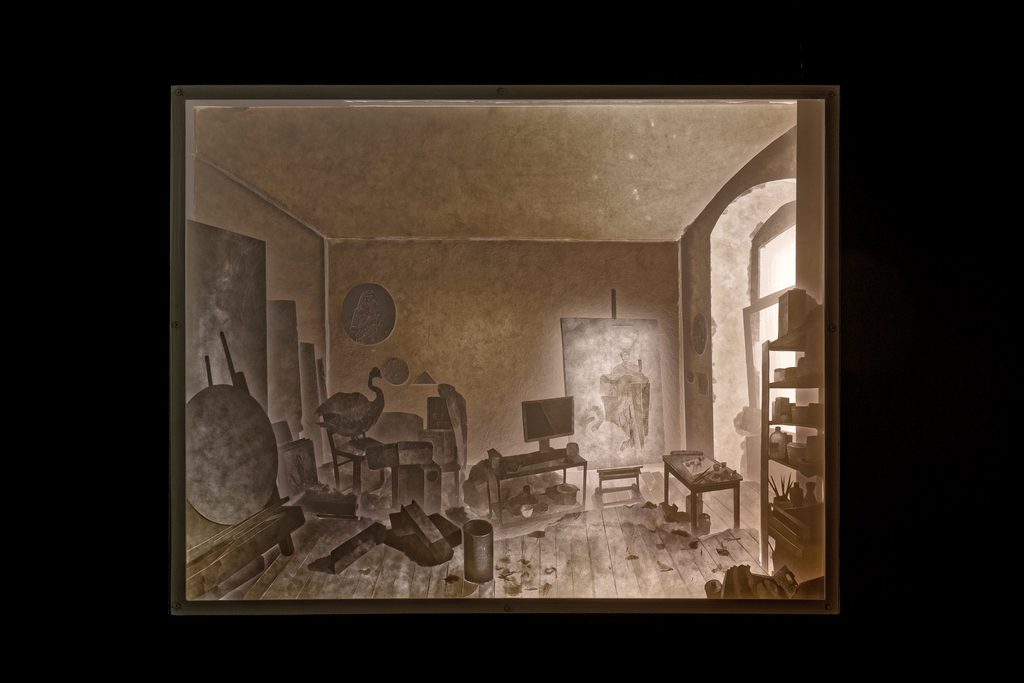
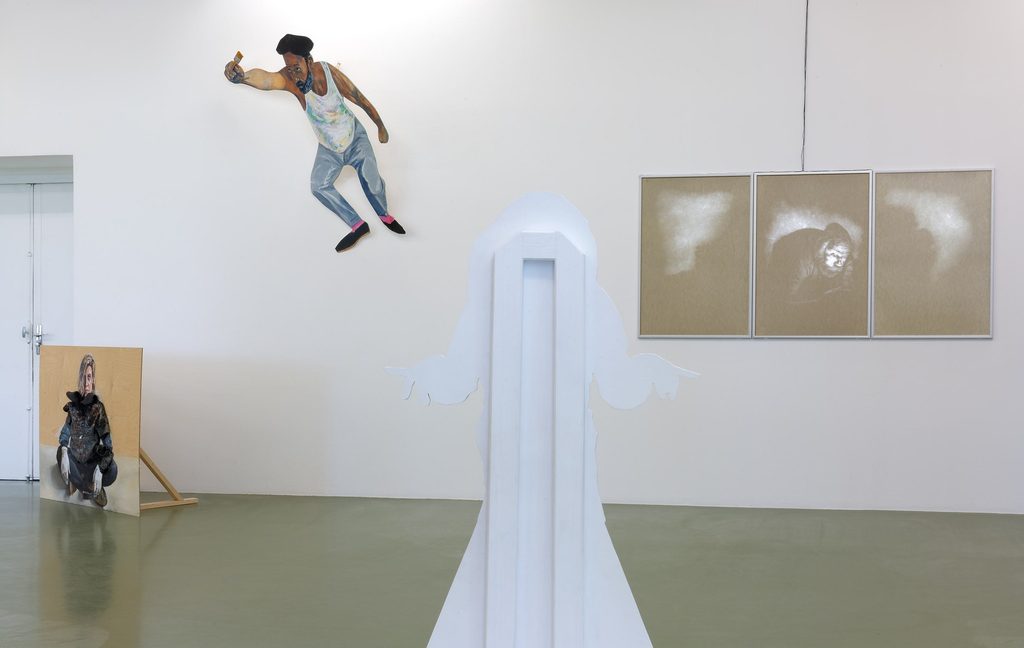
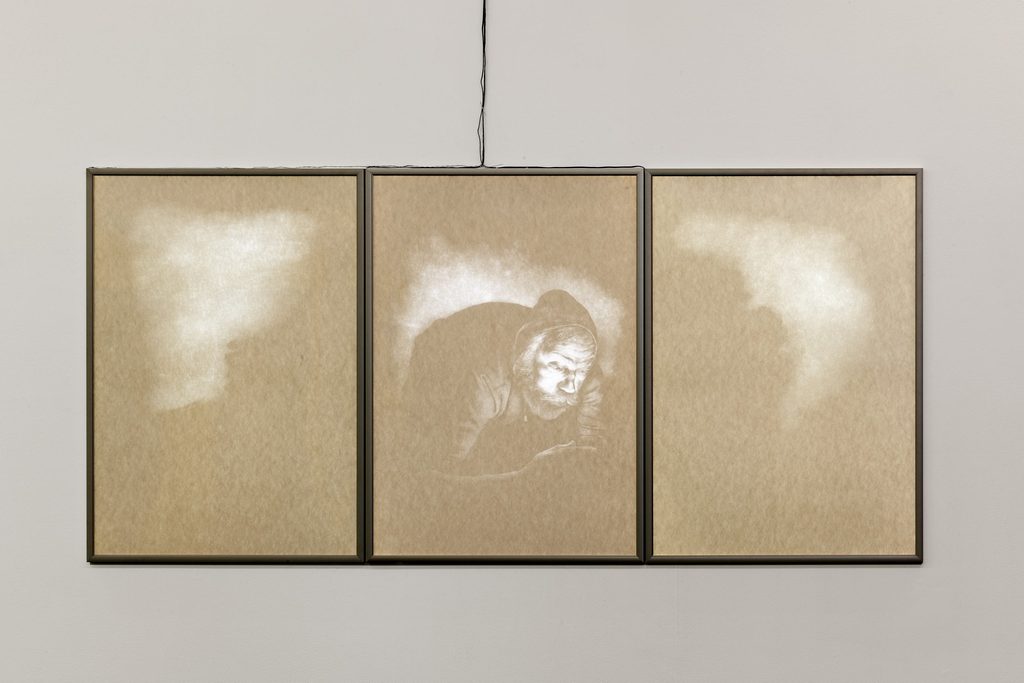
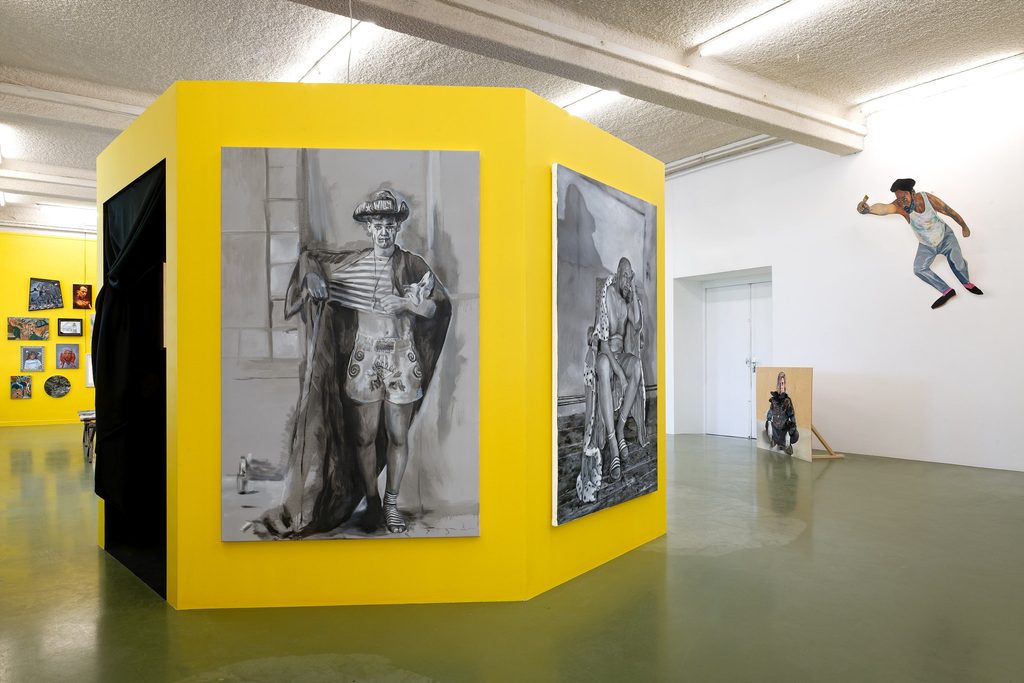
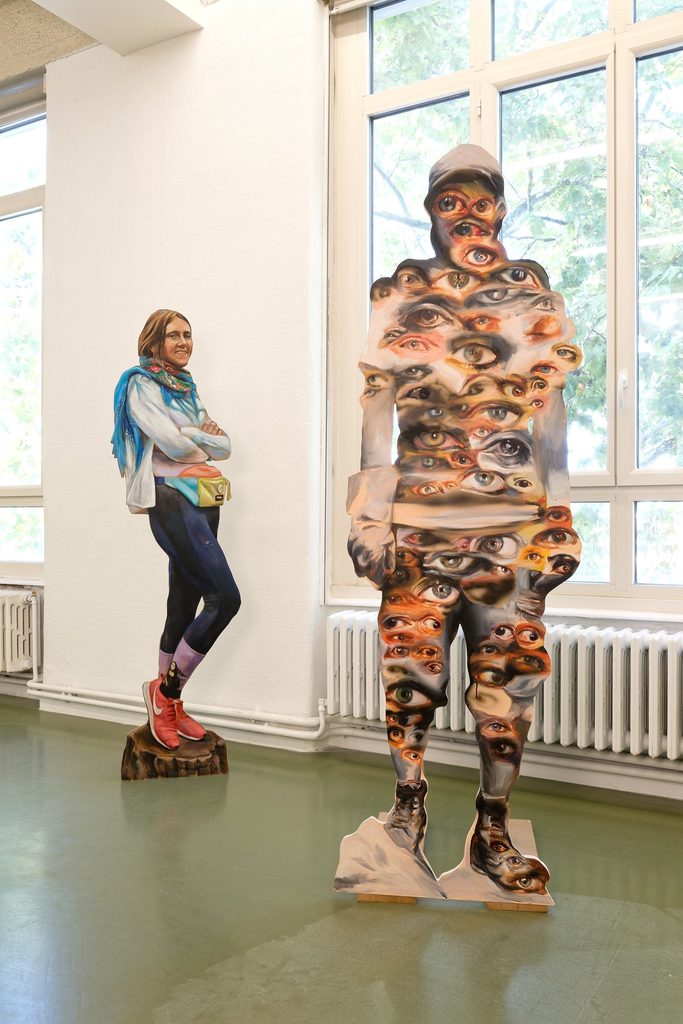
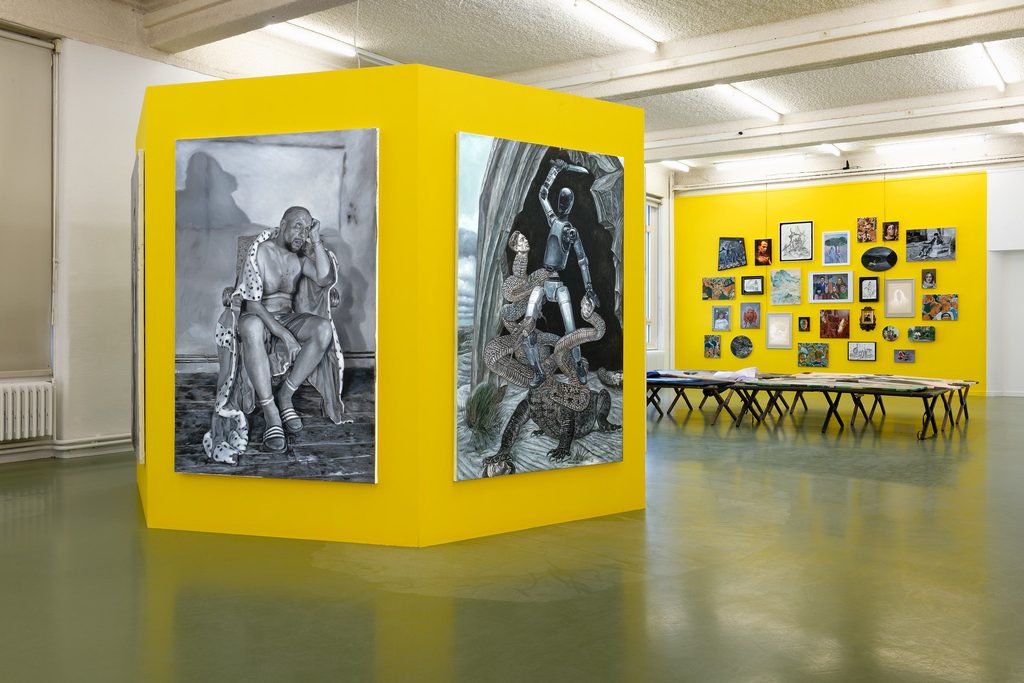
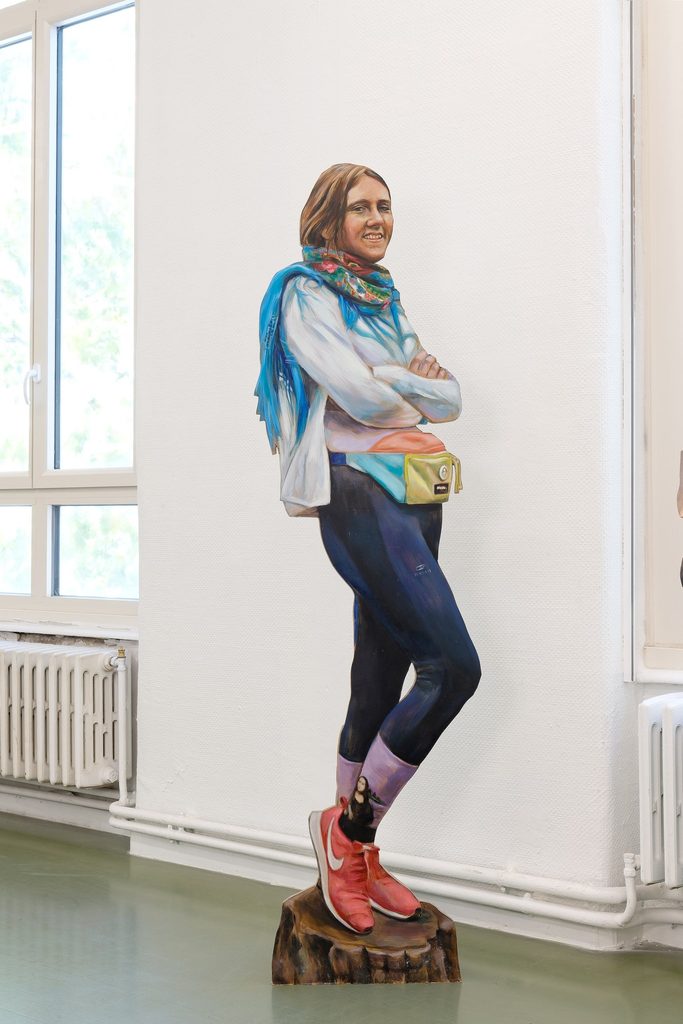
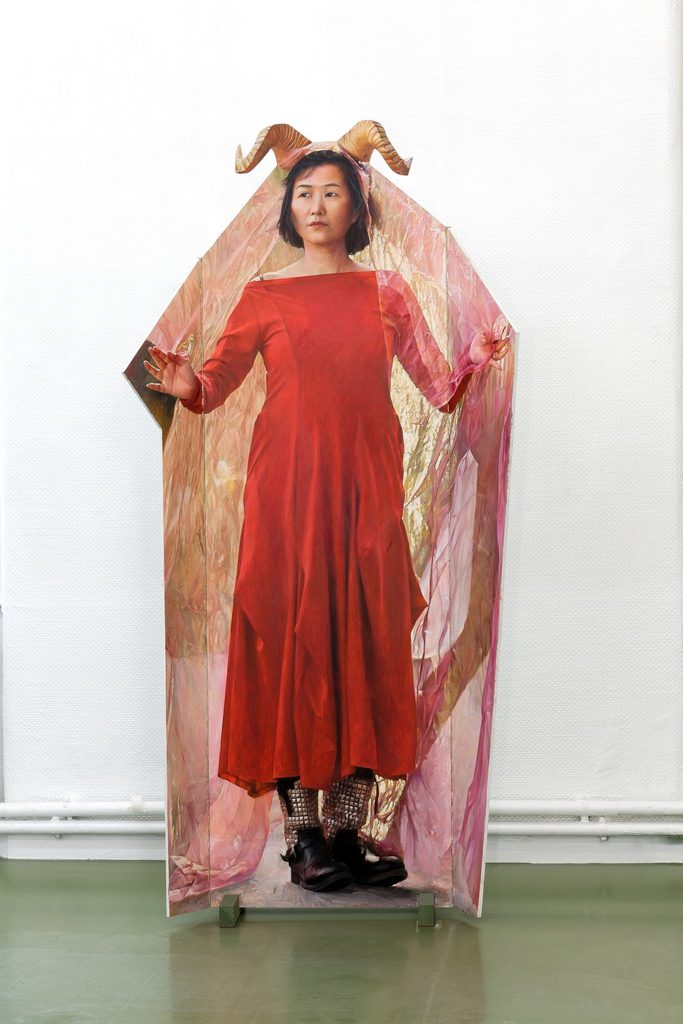
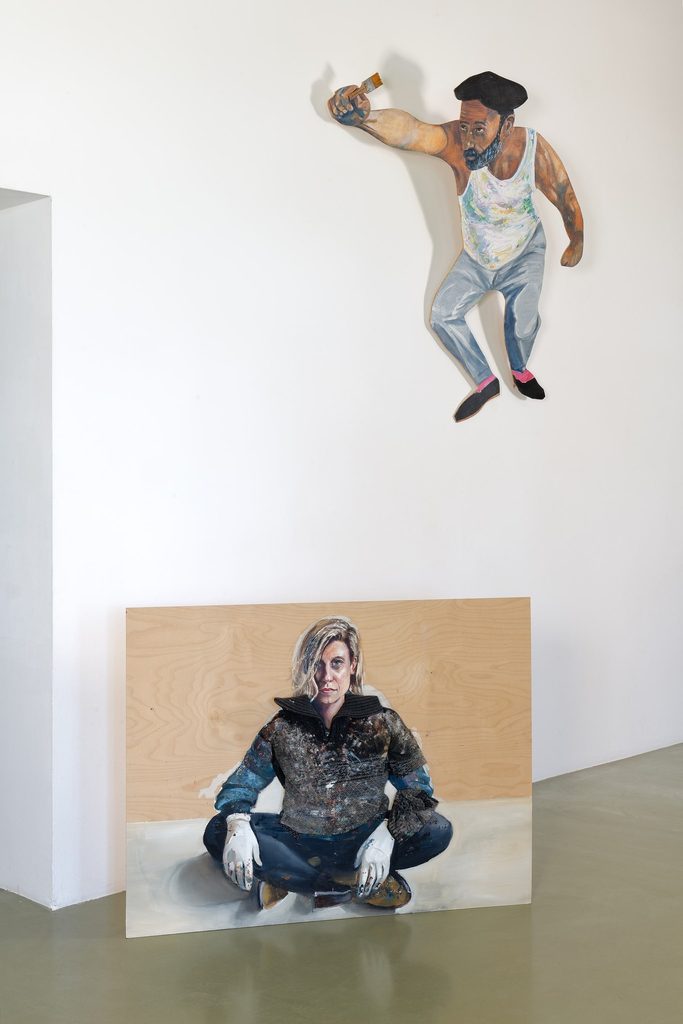
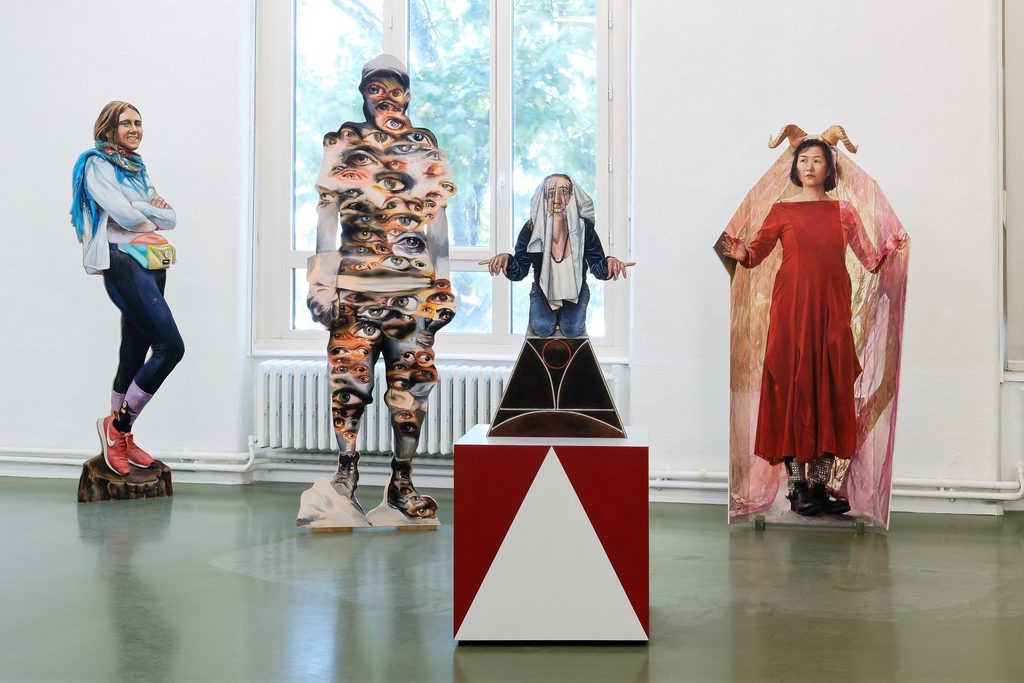
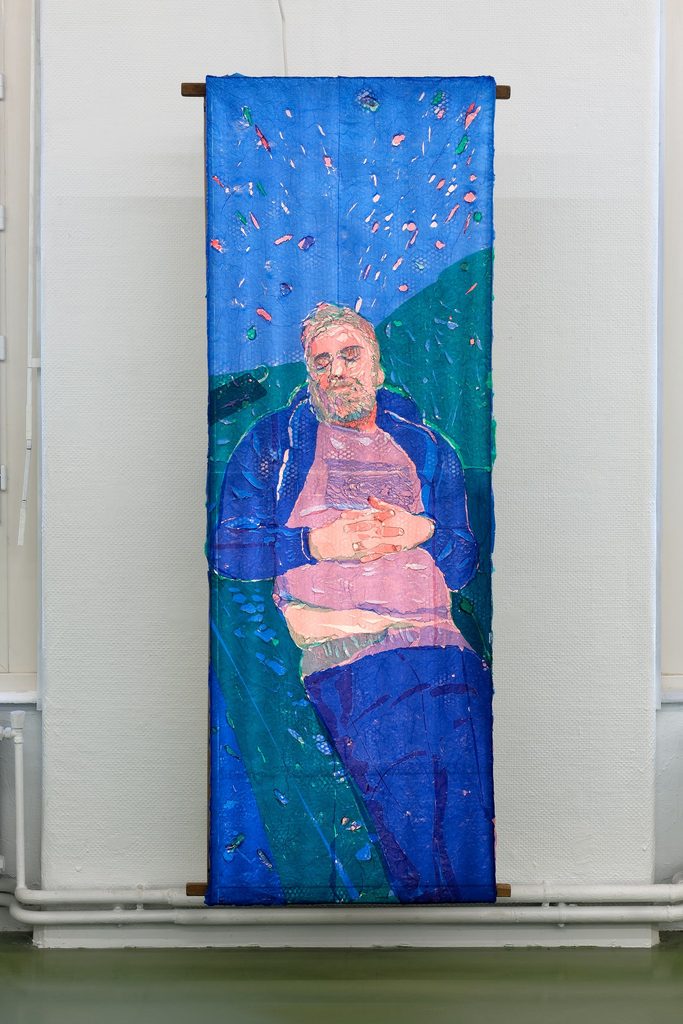
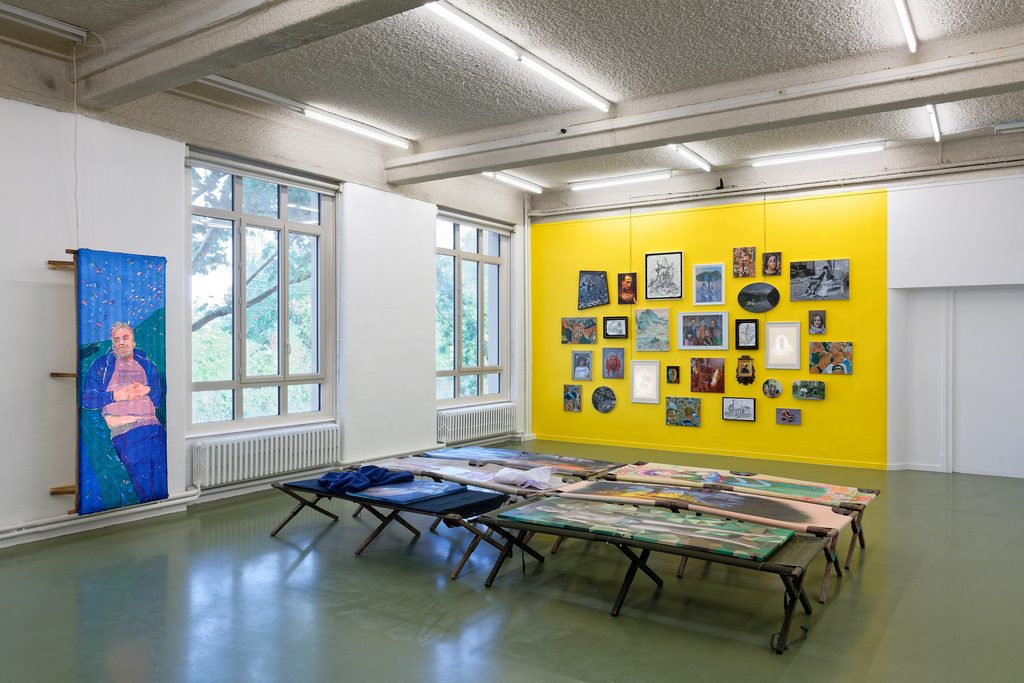
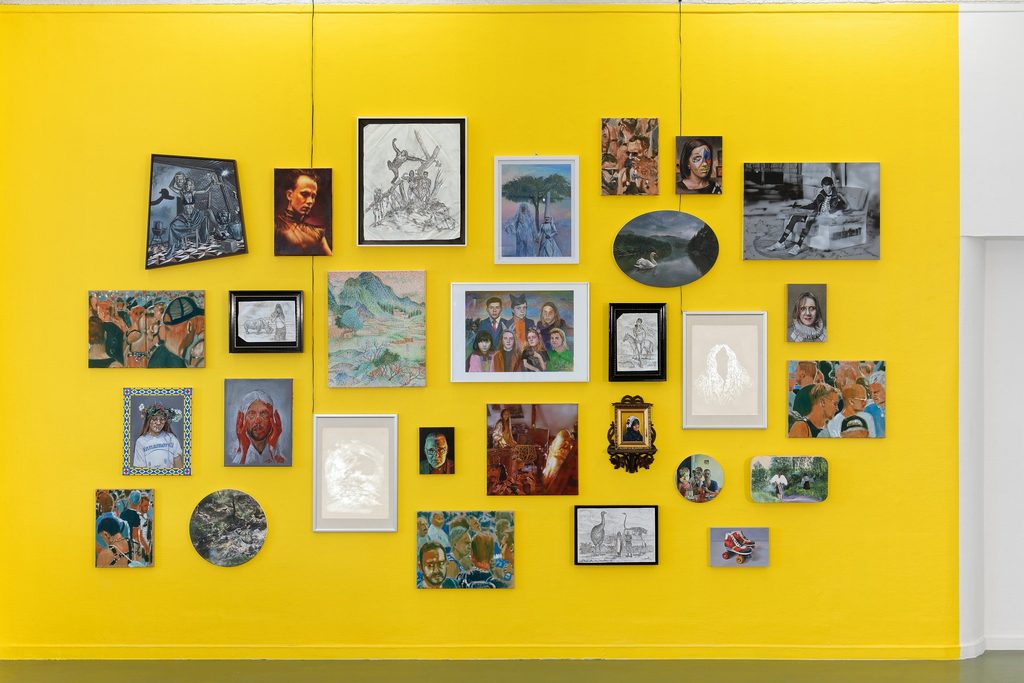
Photo: Blaise Adilon